
How to Install and Care for Fine Art.
Whether you are in the market looking for or just bought a gorgeous piece of art, the natural next step is where and how to hang it, let this be your comprehensive guide to installing and caring for all types of fine art.
Everyone can relate to the feeling of just purchasing a valuable, rare, beautiful, etc object and immediately dreading anything happening to it; the same goes for art. However, according to The Graystone Gallery, a leading factor in artwork damage occurs ¨gradually through exposure to inappropriate environmental conditions rather than sudden accidents.¨ Meaning you are more likely to ruin your piece by hanging it in an unsuitable place unknowingly, rather than suddenly dropping it.
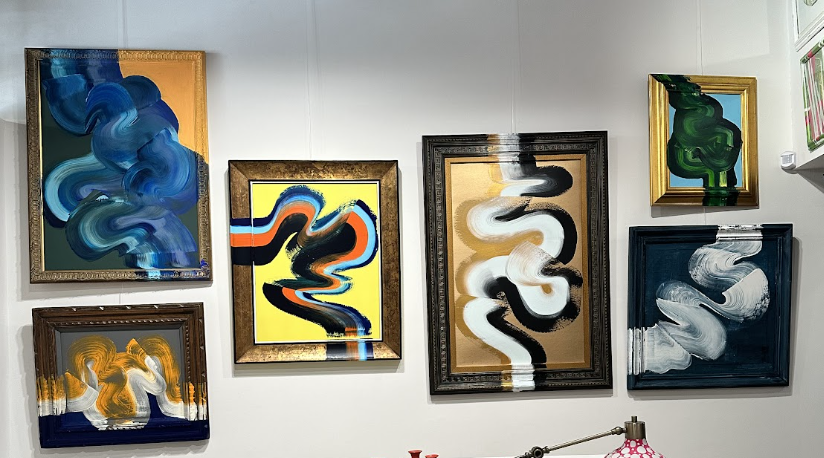
J. Nunez Gallery
Rule 1: Appropriate Environment
Among the biggest environmental risks to artworks is light, particularly ultraviolet radiation, which can cause ¨irreversible fading and material degradation.¨Since this damage is ongoing, it may take years before you notice a painting has substantially faded, at which point the damage has already been done. To prevent this, never hang a work where it receives direct sunlight; additionally, try to position the work on an interior wall as exterior walls experience temperature variations that can stress the materials. Even with these precautions, UV-filtering window treatments, blinds, curtains, and UV-protective plexiglass for paper works can ensure longevity. As for artificial light, using LED lights is preferable to classic incandescent or halogen bulbs, since they emit ¨minimal UV radiation and heat¨ in comparison.
Past light, temperature, and humidity also pose great threats. It's a common misconception that the most important factor here is to keep the temperature at a specific ¨ideal¨ number. Yet maintaining stable conditions is far more important, as dramatic fluctuations are more detrimental to preservation.
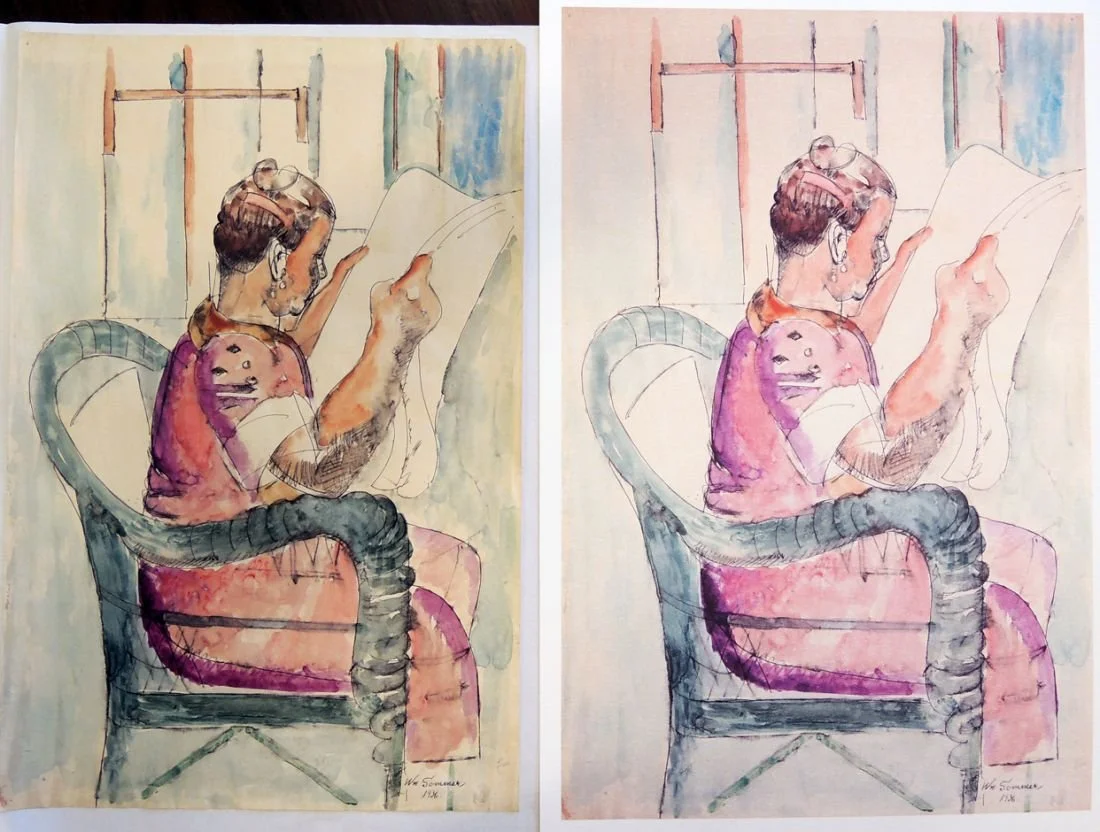
Example of a painting damaged by light, from Princeton Graphic Arts. Painting by William Sommer (1867-1949).
According to Graystone Gallery, a general guideline for ideal temperatures is between 18-21°C, and between 40-60% for humidity.
High humidity levels can cause mold growth, destroying the integrity of a painting and warping the frame and canvas, causing deformation. According to Tanya Singh at the Art Mine, peeling paint and plaster damage are telltale signs of a humidity problem. That's why Artefact Fine Art doesn't recommend basements and attics as ideal spaces for artwork. As humidity tends to be higher, temperature fluctuates more, and there are greater risks of mold growth and flooding.
Additionally, artwork placed above fireplaces or heating/cooling vents experiences more heat, moisture, dust, and potentially soot, all of which can cause erosion.
However, the other extreme isn't ideal either. Low humidity is known to make ¨materials brittle and can cause paint to crack or separate from its substrate.¨
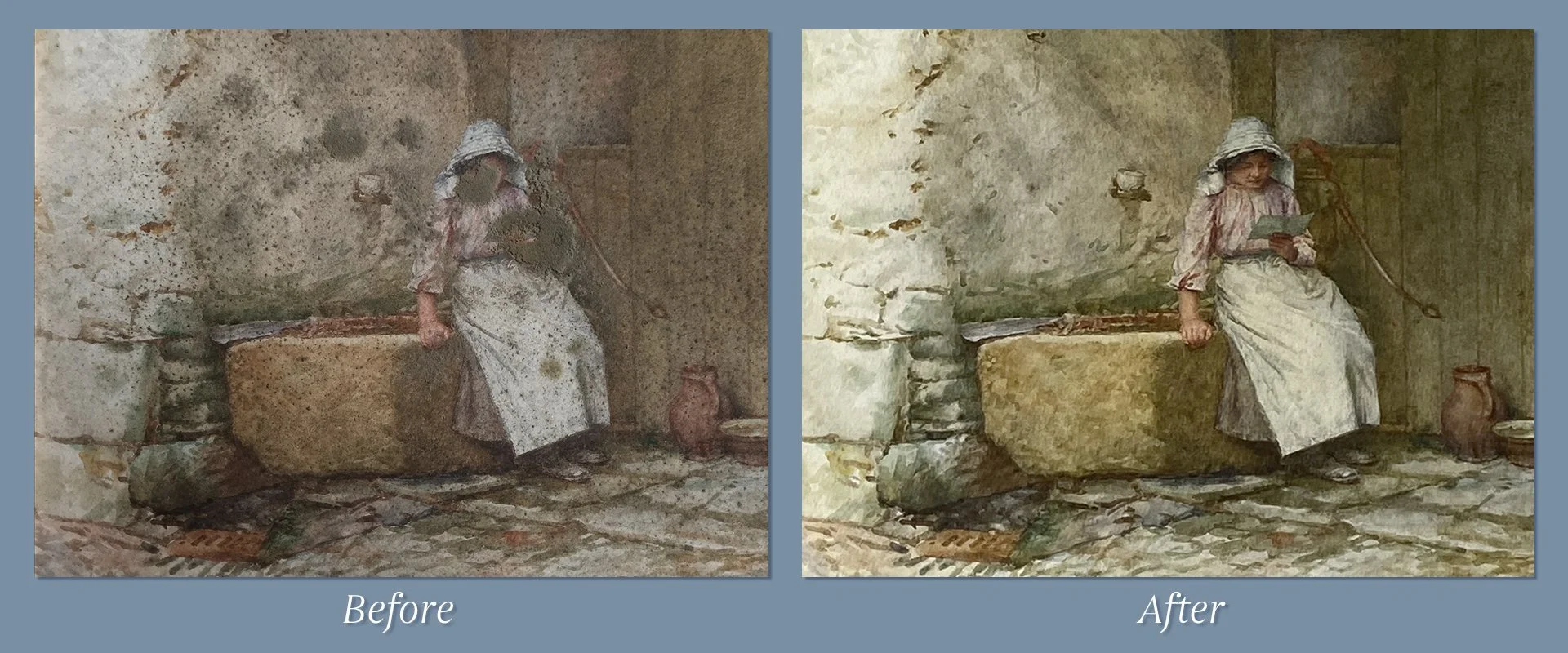
Example of painting damaged by humidity, from Fine Art Restoration Company. Artist not listed.
Rule 2: Proper Cleaning Methods
Over time, you may notice your work getting dusty, looking visibly older, or not as pristine as when you bought it. Natural aging is normal, but you may feel a need to clean it to make it look better. You must approach each work considering what material it is made of before you decide what cleaning method is best.
1. Paintings on Canvas (oil, acrylic, watercolor, etc): It's important to remember paintings on canvas are delicate, and mustn't be manhandled with any harsh chemicals or household cleaners. These products are far too intense and can cause irreversible ¨paint loss, staining, or chemical reactions that worsen over time.¨ For cleaning, it's best to stick to gentle dusting with a clean, soft natural-hair brush. Work in soft light motions from top to bottom to remove any dust, being aware to let particles fall rather than pressing them further into the surface, potentially causing scarring.
You may feel tempted to use a paper towel or fabric cloth to clean the surface, yet these are not suitable materials since they can ¨scratch delicate paint layers or leave fibres embedded in textured areas.¨ The same goes for vacuum cleaners, no matter how small, since the force of the air can damage loose paint or drive debris deeper into crevices.
If after cleaning a canvas with a soft brush you still notice staining, deeply rooted dirt, or discoloration, it's important to consult a professional conservator. DO NOT attempt stronger cleaning methods, as it will most likely result in more damage, and avoid chemicals at all costs.
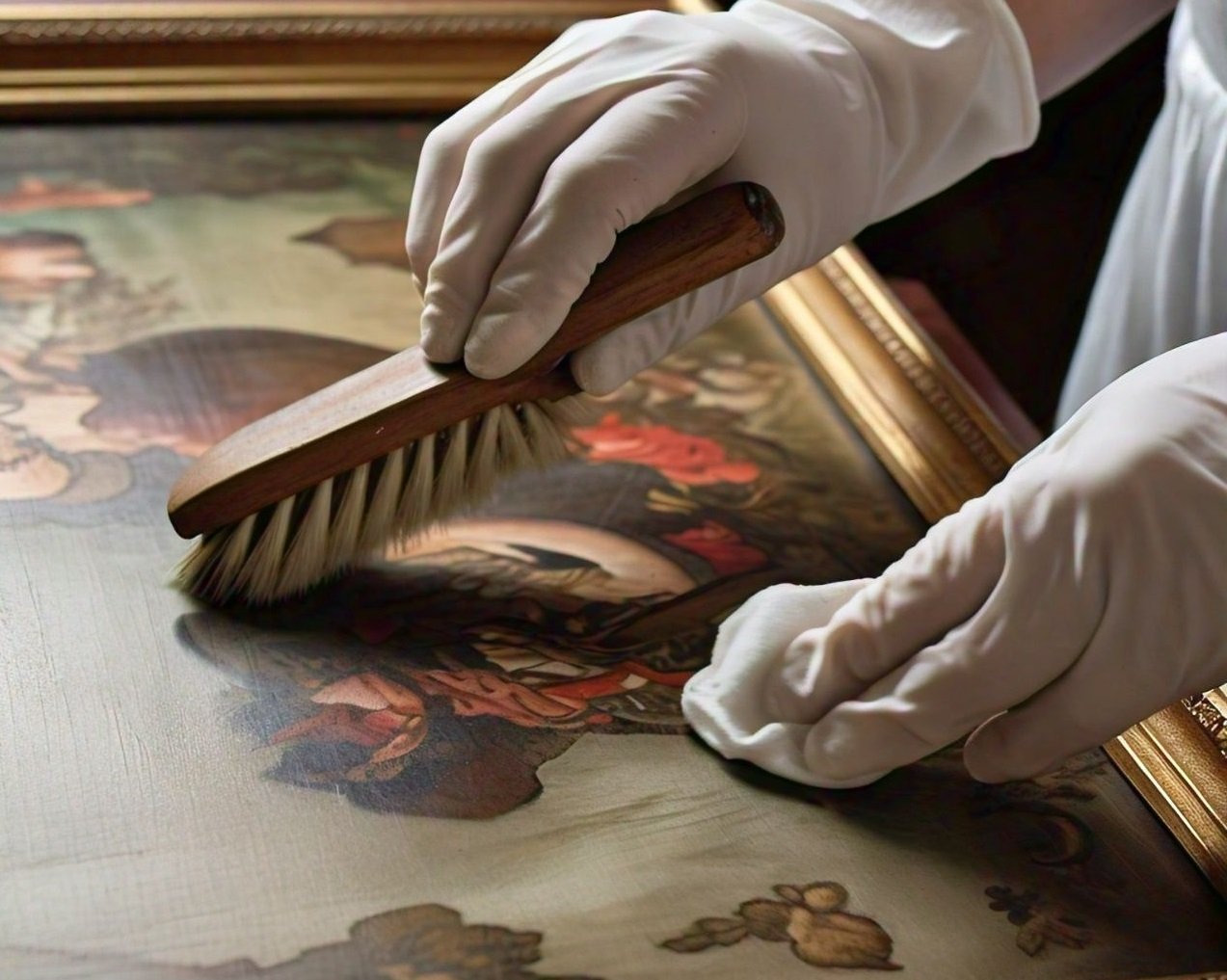
Example of cleaning with a soft brush, from Fortgard.
2. Paintings on Wood: As stated by Artefact Fine Art, paintings on panel can be ¨particularly fragile because the wood can crack or warp as a result of temperature and humidity changes.¨ The same soft brush technique is the best method. If you notice debris in crevices of the wood, using a stiff, clean paintbrush should do the trick to flick it out.
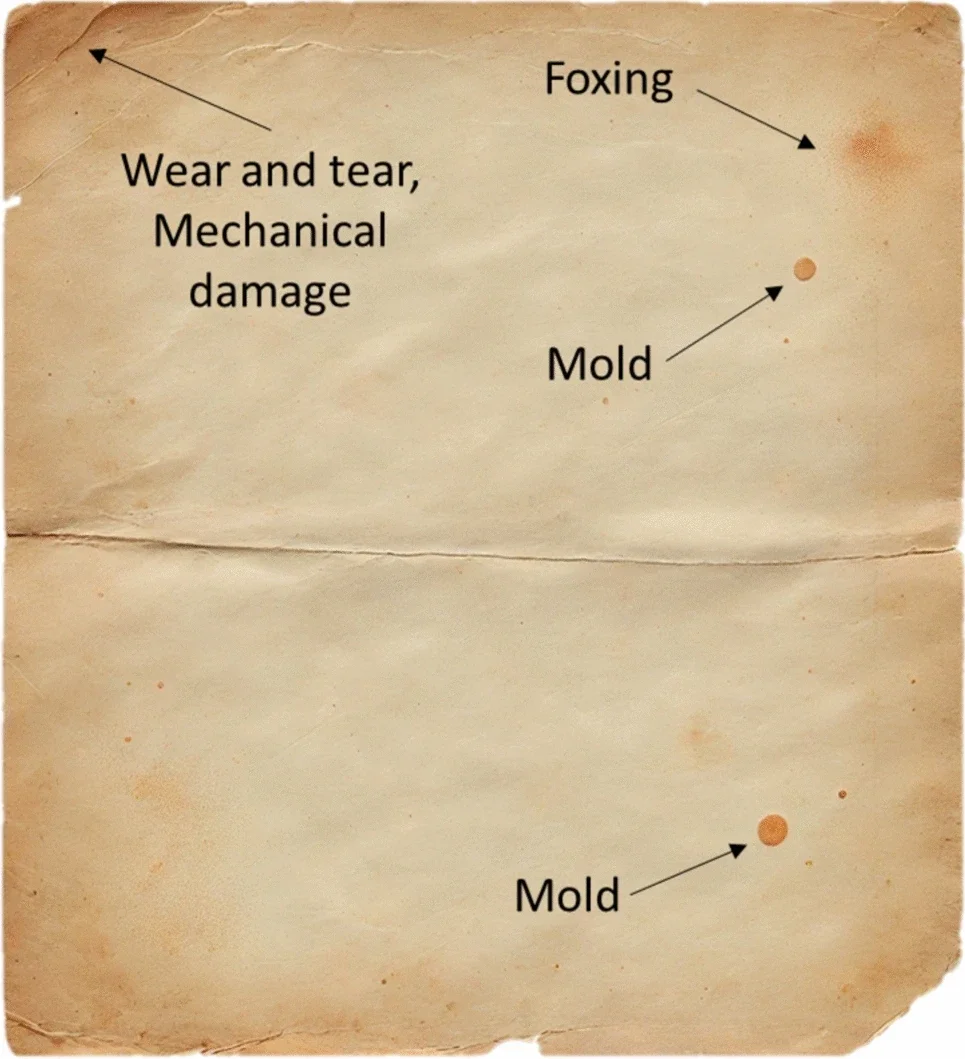
3. Works on Paper: Paper is the most sensitive and fragile of all these elements and requires extreme caution. The material is particularly vulnerable to moisture and mechanical damage. Hence why keeping a paper work inside a UV-resistant plexiglass frame ensures the best possible longevity and protection from quick erosion from light and temperature.
Over time, you may notice small rust colored stains appearing on the paper even if you don't handle or touch it; this is called foxing. Foxing is a natural process of paper aging, caused by either fungal growth, metallic contaminants, or the environment. Foxing can appear through active or past fungal growth, appearing as microscopic fungal spore clusters. Another trigger lies within the acidic elements of the paper itself. Traces of ¨iron, copper, or other metals in paper pulp, inks, or textile finishes¨ when exposed to humidity, can oxidize and corrode, causing discoloration. Finally, improper storage in places with ¨fluctuating humidity, poor air circulation, or acidic storage materials¨ all encourage foxing, especially near edges or folds in the paper.
It is possible to restore paper suffering from foxing or mold growth, but only by professional paper conservators who wash the paper in specialized chemical baths to neutralize the acidity and lighten the spots. Do not attempt to remove this on your own, as you may cause irreversible damage.
4. Glass Framed Artwork: If your work is behind a protective glass frame, never spray glass cleaner directly onto the framed work. You risk the chemical cleaner seeping through behind the frame and onto the work, which can seriously damage it. Instead, spray the cleaner on a microfiber cloth and then gently wipe the glass.
Rule 3: Secure Installation
Along with overexposure to elements, the American International Group (international insurance organization) stated that a large portion of fine art damage comes from ¨breakage/accidental damage¨, especially during moves. This can be mitigated through secure installation and hanging of artworks, keeping in mind the weight of the piece and the structure of the wall.
After buying an artwork, it's best to consult the gallery/artist for the best hanging method, as the piece may have ¨specific requirements based on the frame choice, artwork construction, or other technical considerations¨ as put by the Graystone Gallery.
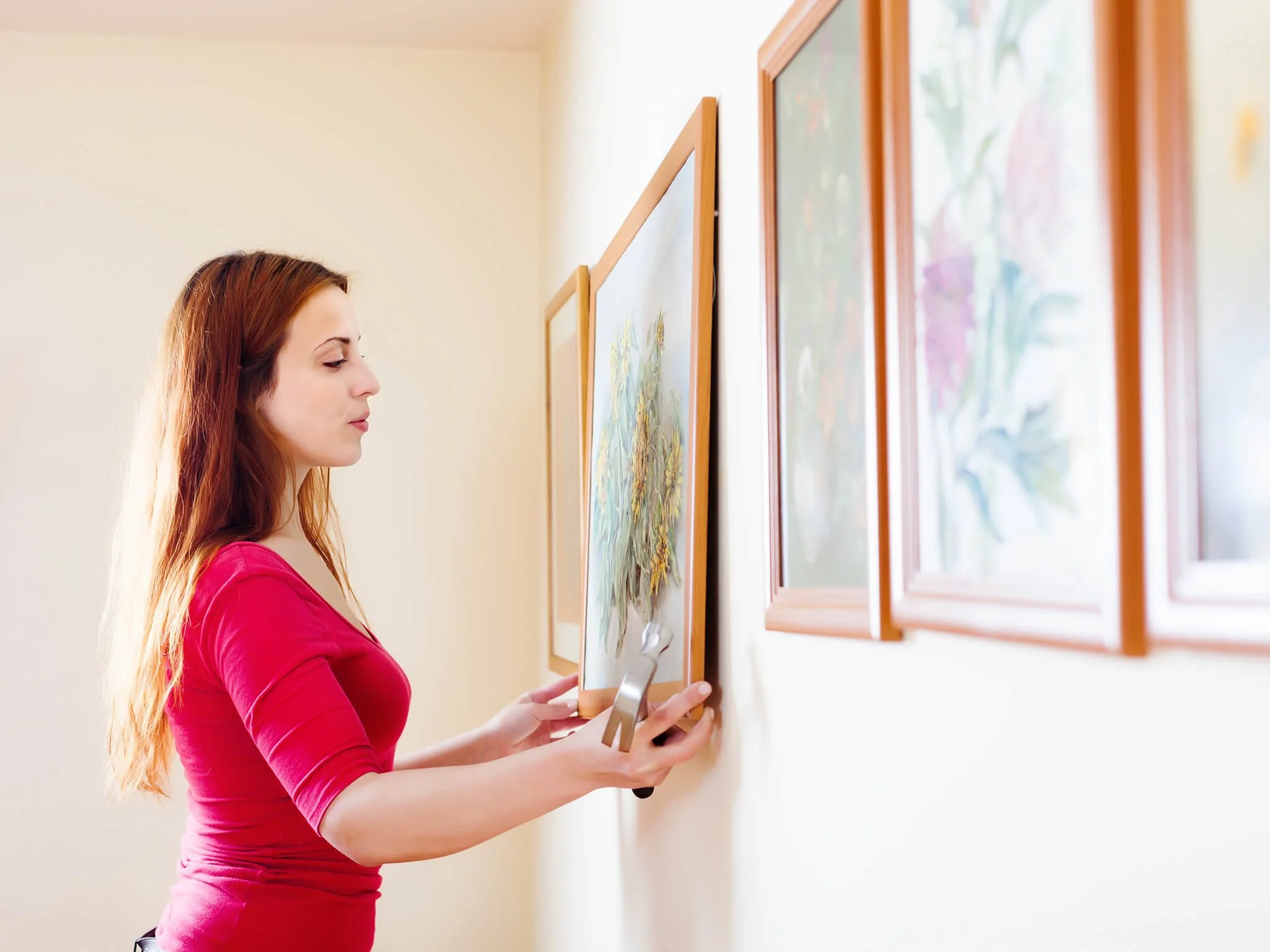
Image from Franklin Arts
As for general rules:
For works up to 2kg: Standard picture hooks will work fine.
For works between 2-10 kg: Assess your wall type and choose the appropriate anchors. For hollow walls, use toggle bolts or heavy-duty drywall anchors. Whereas solid masonry walls can accommodate different ¨screw and anchor combinations.¨
For works over 10kg: Due to their weight and subsequent size, professional installation is the best choice. These works often need delicate installation, adequate planning, and the knowledge of an experienced professional, as the risk of injury to you or the painting is high. Even if you do successfully mount it, its integrity over time may waver, causing a potential safety risk in the future.
For works larger than 60cm: Always use 2 anchor points instead of 1. As the weight of the painting over time may eat at the wire, or cause instability.
Hanging Wire: It's an essential and helpful rule to always make sure you are using hanging wire made for paintings, as regular wire may not hold over time. The Art Mine suggests using wire able to support ¨25% more weight than the total weight of your artwork.¨
Space Between Each Piece: If you wish to make a collage of paintings on a wall, a good rule is to keep each painting 2-3 inches away from each other. This is to leave enough space for each painting to shine, as crowded walls reduce visual impact and ¨increase the risk of accidental damage.¨
Ideal Hanging Height: According to The DIY Playbook, a general guide is to hang the center of the artwork about 57–60 inches from the floor. Of course, this may have to be tweaked considering how tall your ceilings are. A mistake often made is hanging the work too high up, so people have to crane their necks and don't get a full view of the work, taking away from its impression.
For Furniture: Additionally, for hanging pieces above furniture, The DIY Playbook suggests keeping the bottom of the frame about 4–8 inches above the furniture. This is so it doesn't feel like it is floating too high, or directly above it, so that it looks crowded.
Placement for a Busy Home: If you have a fuller house with children or pets running around, hanging works in safer, higher locations can reduce accidental damage, as advised by Artsy Magazine. Or, if you want to be able to hang your art anywhere and be stress-free about its condition, just get the print! Prints are cheaper, safer, and generally less stressful ways of owning an artwork you like, with no fear of damage or depreciation.
Rule 4: Admiration as a Form of Care
Finally, routinely admiring your art and paying attention to its ageing process can double as a form of care. Practicing this will allow you to notice small changes such as ¨mold, loose canvas, new cracks, insect damage, etc.¨ before they become serious problems. This can save you endless resources, money, and energy down the road if you notice problems in their infancy.
Additionally, Annabel Keenan at Artsy recommends photographing all features of your painting when you first buy it (front and back). This works by keeping an accurate record of any ¨existing cracks, texture, patina, or imperfections¨ so you can spot changes in the future more easily. If at one point, you believe your painting has changed, you can consult the earliest photos of it. This will also help to catch problems in their early stages, preventing permanent damage.
Lastly, as stated by Artefact Fine Art, keep detailed records of your art collection such as: ¨invoices, provenance, condition reports, appraisals, insurance documents, and photographs.¨ These will serve as indispensable for insurance, resale, and tracking general condition through time.
So now that you know how to care for, clean, and install your fine art, visit us at J. Nunez Gallery in Millburn or Summit, New Jersey, to fulfill all your fine art collector needs!
