
Abstract or Figurative: Why Are You Drawn to One More Than the Other?
Some people walk into a gallery and immediately look for something they recognize: a face, a landscape, a flower or a figure. Others are drawn first to color, movement and texture, sometimes precisely because they cannot name what they are looking at. Neither response makes someone a more sophisticated viewer. They are different ways of entering an image, and each can lead to a rewarding relationship with a work of art.
The useful question is not which kind of art is better, but what your eye needs in order to stay interested. Recognizing that starting point can help you choose with more confidence, while leaving room for a painting to surprise you.
Recognition Changes the Job
When you look at a representational painting, a recognizable subject gives you an immediate foothold. A body, building or horizon offers a structure before you have considered the brushwork or composition. You may still need time to understand the atmosphere, but you already have somewhere to begin.
Recognition also brings questions with it. Who is this person? Where does that road lead? What does this place remind me of? A familiar subject can encourage you to imagine a story beyond the canvas. That does not make representational art simple; it means recognition carries part of the experience, leaving the artist free to complicate everything around it.
Abstract Art Removes That Shortcut
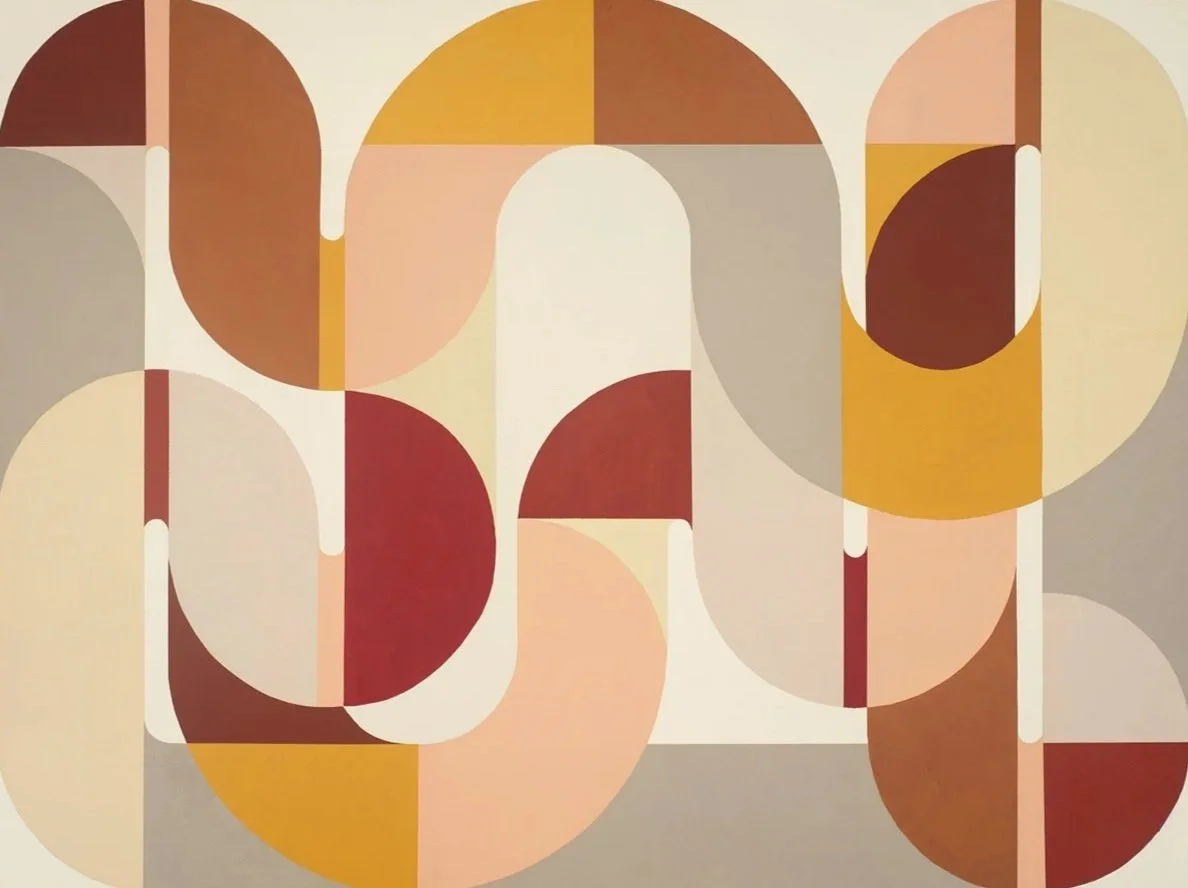
Take away the identifiable face, landscape or object, and color, line, rhythm, texture and space become more prominent. No figure tells you where to begin. Your eye has to negotiate relationships across the surface: a dark shape against a pale ground, a curve interrupted by an angular edge, a repeated mark that suddenly changes direction.
For some viewers, this freedom is inviting. For others, the absence of an obvious subject feels frustrating. If that is your response, try noticing where your eye travels instead of looking for a thing to identify. As we explored in why some paintings keep your attention, the first thing you notice is only the beginning of what a composition can offer.
“I Don’t Get Abstract Art” Can Mean Something Else
Sometimes “I don’t understand abstract art” means “I don’t know what I am supposed to recognize.” Those are different difficulties. A painting may not be asking you to identify an object or decode a hidden message. It may invite you to notice how one color changes another, how an uneven shape creates tension, or how texture becomes more visible as you move closer.
Try describing what you can actually see before deciding what it means. A painting might feel dense at the center and open at the edges, or balanced despite a large area of empty space. You can respond to these relationships without inventing a story about them. Equally, you are allowed to find them uninteresting; giving a work a fair look does not oblige you to like it.
Figurative Art Gives You a Story Faster
A person looking away, an empty chair or a road disappearing into trees can set a narrative in motion almost immediately. You begin supplying information that is not literally painted. Perhaps the chair suggests someone who has just left, or the landscape recalls a place you knew as a child. The work becomes a meeting between the image and your own experience.
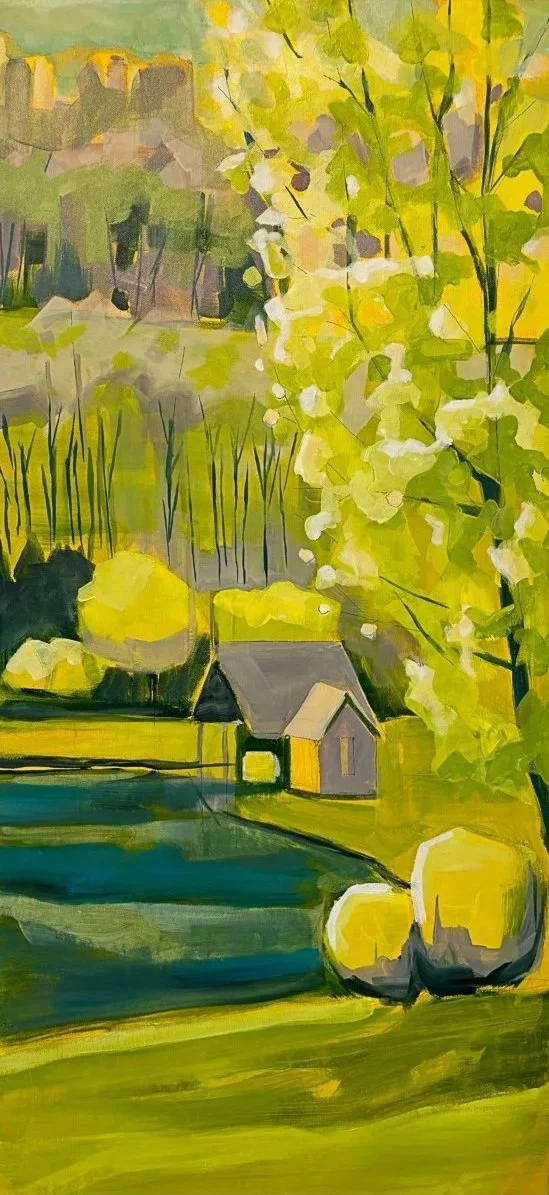
But identifying the subject is not the same as having finished looking. Once you have recognized a landscape, ask what makes this particular landscape distinctive. Its color, light, point of view or handling of paint may matter more to your lasting interest than the fact that it shows trees and water. Representational work has an abstract structure too, even when the subject initially hides it.
Abstract Art Leaves Room for Association
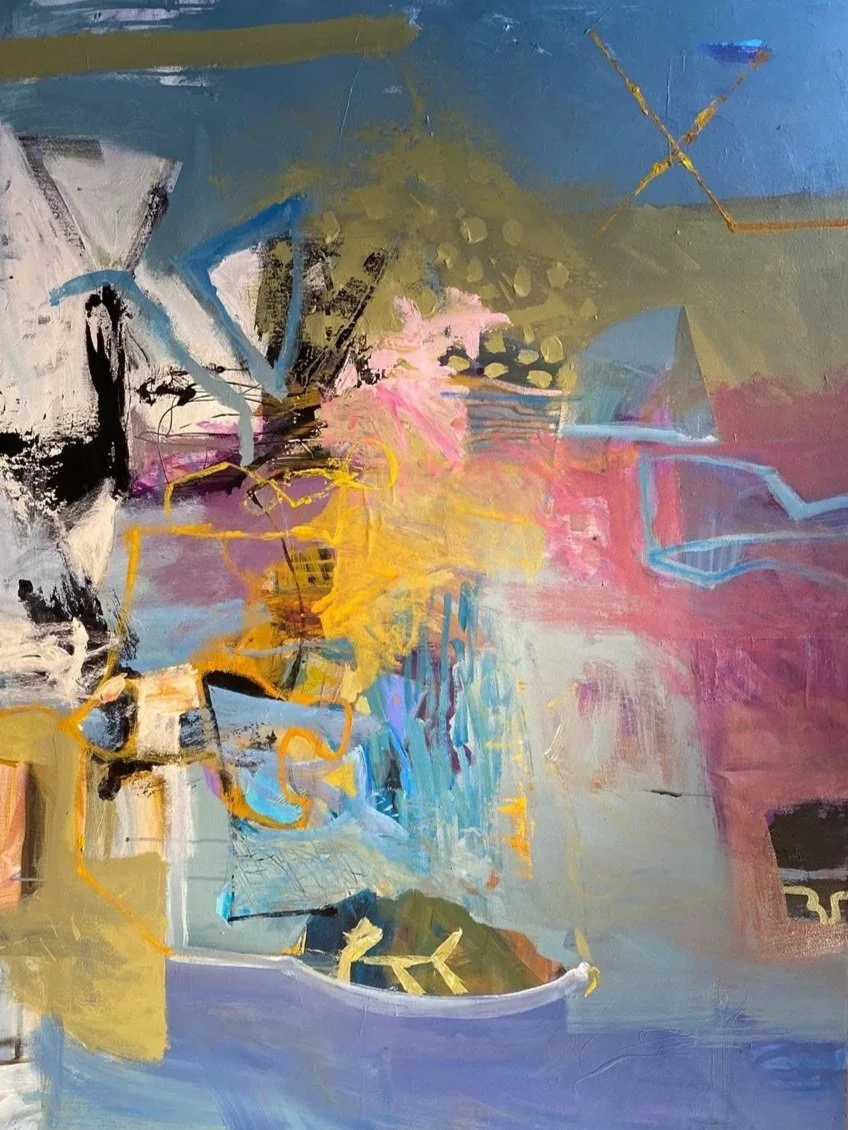
With fewer recognizable cues, an abstract painting can leave more room for personal associations. One viewer may think of weather, another of music or architecture, while someone else enjoys the arrangement without connecting it to anything outside the canvas. These responses can coexist without one becoming the correct interpretation.
That openness can be part of the pleasure of living with the work. An image that felt restless on one day may seem energetic on another. This is a possibility rather than a promise: recognizable subjects can be ambiguous, and abstract paintings can be direct. What matters is how the particular work meets your attention.
Your Preference May Not Be Fixed
It is easy to say “I’m an abstract person” or “I only like figurative work” and treat that preference as permanent. Yet familiarity can change what you notice. Spending time with different paintings may make an unfamiliar kind of image easier to approach, even if it never becomes your favorite.
Research comparing viewers with different levels of art experience has found that expertise can influence preference ratings. These are patterns across groups, not a test of anyone’s taste. They do not establish that abstract art is a destination you should graduate toward. The practical invitation is simply to keep looking widely enough that an old label does not decide your response in advance.
There Is a Huge Middle Ground
The distinction between abstract and figurative sounds cleaner than it often looks. A landscape can remain recognizable while dissolving into broad areas of color. Flowers can become a network of gestures, and an abstract composition can suggest a body or a horizon without fully describing one. Recognition may appear, disappear and return as you look.
This middle ground can be especially inviting if you enjoy a subject but also want room to explore. You recognize enough to enter the image, while the painting leaves something unresolved. Rather than deciding which category owns the work, notice what the movement between recognition and abstraction adds to your experience.

Try Looking Before Choosing a Side
On your next gallery visit, compare a recognizable image with a work that has no obvious subject. Notice what you saw first in each, then what held you after that initial impression. Were you responding to a story, a color relationship, movement, texture or atmosphere? Your answers may change from painting to painting, which is more useful than forcing every response into one category.
Remember that surroundings can also influence what you notice. In why art looks different at home than in a gallery, we look at how context changes the encounter. Give the work time, and consider both its immediate attraction and the kind of company it might become in your own space.
A Note From the Gallery
At J. Nunez Gallery, the two locations offer a useful way to explore this question in person. Millburn focuses on abstract art, while Summit presents non-abstract work and fine art photography. Visiting both gives you a chance to compare how you respond to different kinds of imagery, without needing to choose a side.
Bring your preferences with you, but leave them open to revision. You may discover that a figurative painting holds you through its color and rhythm, or that an abstraction feels familiar in a way you cannot quite explain. The goal is to understand your own looking well enough to recognize a connection when it happens.
Sources & Further Reading
Experiencing Art: The Influence of Expertise and Painting Abstraction Level examines responses to paintings across a range of abstraction. The Influence of Art Expertise and Training on Emotion and Preference Ratings for Representational and Abstract Artworks explores how experience relates to judgments of different kinds of art.