
Why Does Art Look So Different at Home Than It Did in the Gallery?
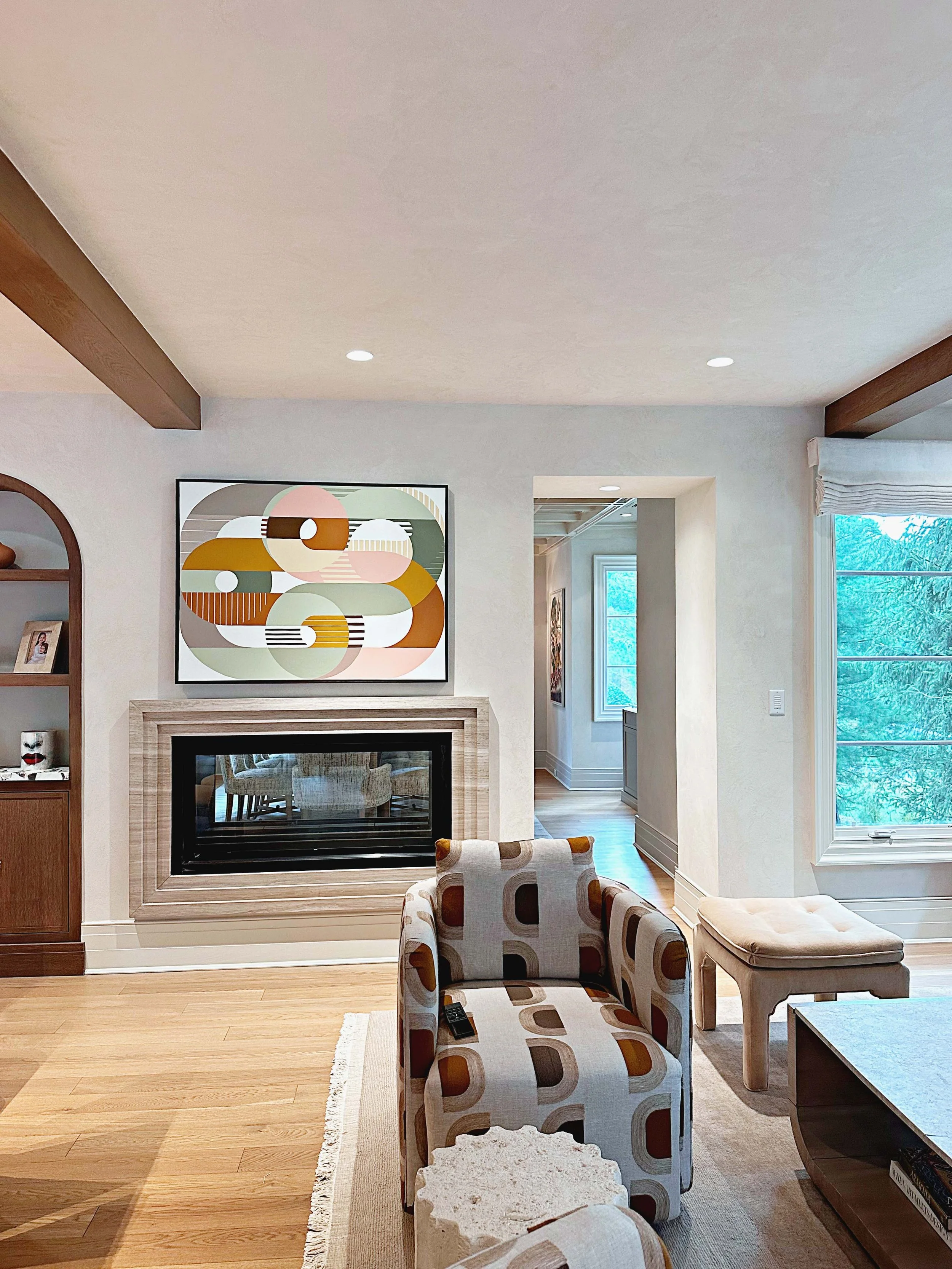
You saw it in the gallery and loved it. The color felt strong, the scale seemed right, and something about the piece made you stop. When it arrives at home, however, it can feel unexpectedly different. It may seem quieter or more vivid, larger than you remembered or surprisingly small, even though the artwork, the frame and the person looking at it have not changed.
The difference lies in its surroundings. Light, wall color, viewing distance, furniture and architecture all influence what catches your eye. A gallery visit gives you one set of conditions; your home supplies another. Understanding that change can help explain why living with a work becomes a different experience from first encountering it.
A Gallery Is Designed to Make You Look
A gallery has a clear purpose: to direct your attention toward the art. Quiet walls, minimal furniture, space between works and deliberately positioned lighting reduce the number of things competing for your eye. In that setting, it is easier to study a painting on its own terms and notice details you might overlook in a busier room.

At home, your painting has company. In the living room, it might share your attention with a sofa, a window, books, lamps, a patterned rug and a television doing its best to win every visual argument. These surroundings change the artwork’s role. You begin to experience it as part of a larger environment, and the relationships it forms there can make it more interesting.
Light Changes More Than Brightness
Anyone who has tried on clothes under unforgiving dressing-room lights knows how much illumination can change an impression. Museum and gallery specialists consider both the amount and quality of light when presenting art. The Metropolitan Museum of Art has discussed how carefully balanced illumination helps viewers perceive color and technical detail, while Smithsonian lighting specialists describe the relationship between a work, its lighting and the surrounding wall.
At home, those conditions shift throughout the day. A painting near a window may feel crisp and energetic in the morning, softer in late afternoon and different again under lamps at night. Moving shadows can reveal texture or make it less noticeable, while warm artificial light may alter the apparent balance of a palette. Seeing those variations is part of the pleasure of living with a work over time.
Changing perception should be distinguished from damaging exposure. Direct sunlight can cause irreversible fading and deterioration, so a position that looks appealing at one moment may still be unsuitable for the long-term care of the work. Consider how light reaches the wall across the day before deciding where to hang it.
Your Room Changes the Scale
A painting that looked substantial on an isolated gallery wall can feel smaller above an eight-foot sofa. The reverse can happen when a work that seemed manageable in a spacious gallery arrives in a narrow hallway. Its dimensions remain the same, but the furniture, windows, ceiling height and architectural details give you a different set of reference points for judging its presence.
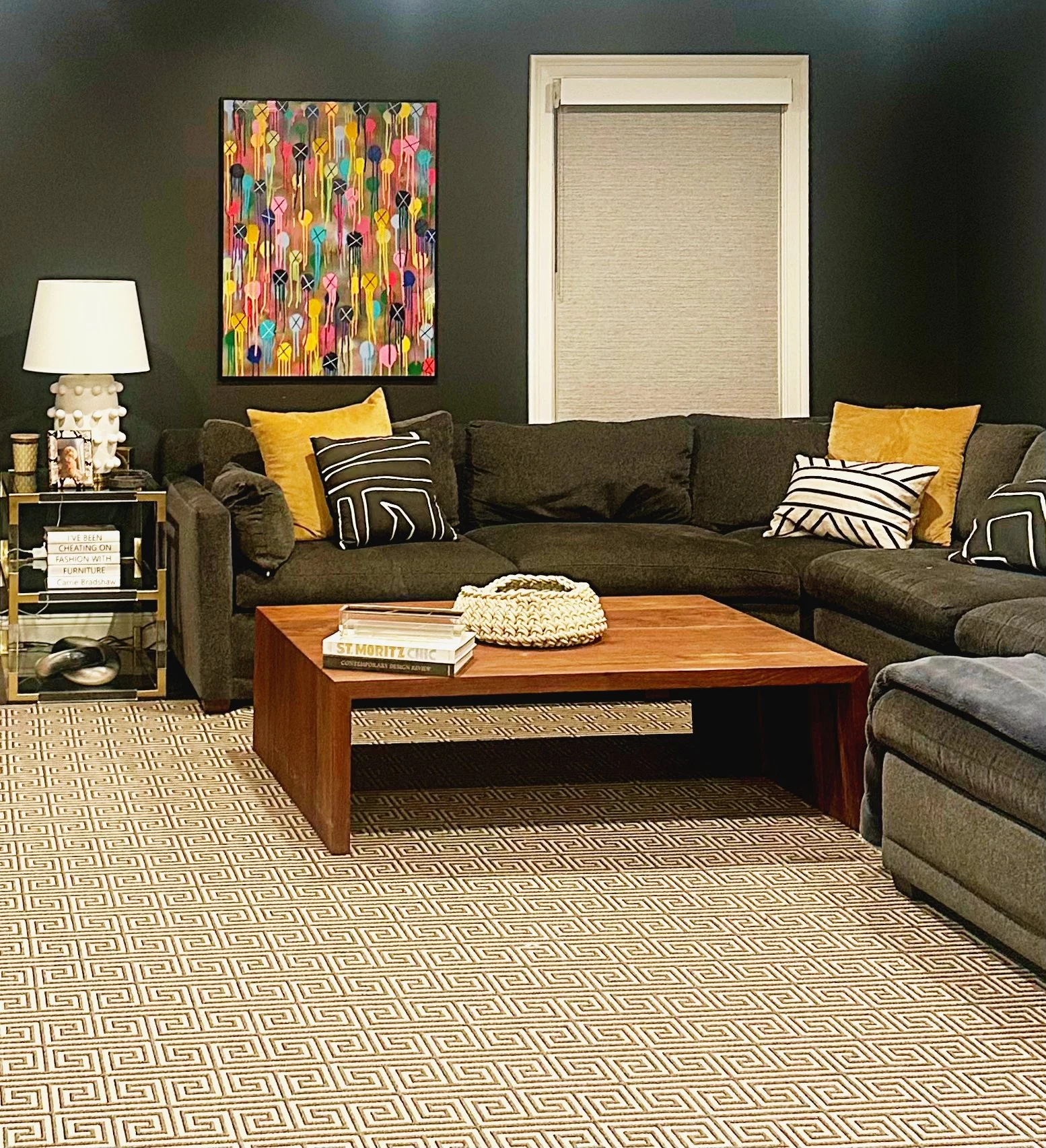
This makes scale particularly difficult to judge from a website photograph. A 48-inch painting shown alone on a screen provides little information about how it will relate to a fireplace or the space between two windows. Knowing the dimensions is essential, but it helps to ask a second question: what will those dimensions feel like in the room where you plan to see the work?
The Wall Is Part of the Picture Now
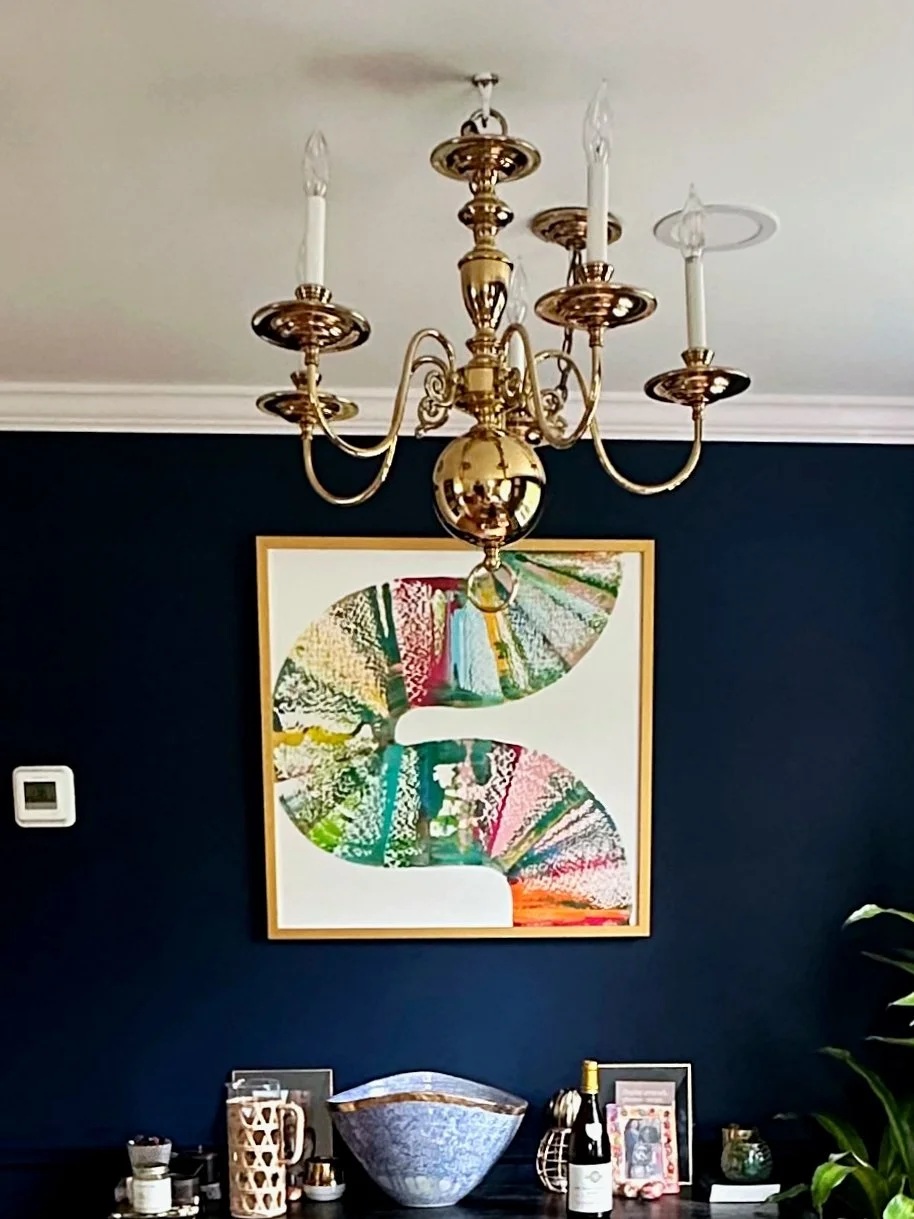
The same colorful painting can feel different against white, deep charcoal or warm wood. Research into visual perception has examined how surrounding colors, lighting and visual context affect the way people perceive and evaluate artworks. The room becomes part of that experience as soon as the piece is installed.
A pink within the painting may echo a chair across the room, while a dark line becomes more prominent against a pale wall. A restrained work may provide a quiet point in an otherwise active space. These relationships can be more rewarding than a straightforward color match, which is why choosing art only to coordinate with the furniture can overlook much of what it has to offer.
Living With Art Takes Time
A gallery visit concentrates your attention into a relatively short encounter. At home, you see the work repeatedly: from across the room, while talking on the phone, in winter daylight, at night, and when the house is full of people. Details that barely registered at the gallery may gradually become important, while others recede. Bringing a work home begins a longer viewing experience that unfolds alongside ordinary life.
So Which Version Is the “Real” One?
Both experiences belong to the artwork. The gallery offers a chance to look with many distractions removed; your home lets you discover how the piece feels in the place where you spend your time. The first encounter may tell you whether it holds your attention. Living with it shows you how that interest develops.
This is one reason to think beyond whether a painting perfectly matches a room today. Furniture moves, walls are repainted and light changes with the seasons. A work you care about can remain through those changes, forming new relationships with its surroundings as your home evolves.
A Note From the Gallery
If you are considering a piece and wondering how it might feel at home, bring a photograph of the wall or room when you visit J. Nunez Gallery. Include the furniture, architecture, available light and surrounding colors. Those details tell us far more than wall measurements alone and help us discuss how the work might become part of the space.
The practical question of whether an artwork will fit is only the beginning. Seeing the room allows us to consider its presence, the places from which you will view it and how the two might work together over time.