
Why Does Texture Matter So Much When You See Art in Person?
A photograph can show you the color of a painting, its composition and even a suggestion of its scale. Texture, however, is much harder to translate. A thick ridge of paint can flatten into a shadow, paper can lose its physical character, and layered fragments can merge into a single image. A translucent material may look like a solid block of color.
That is one reason some artworks feel dramatically different when you finally stand in front of them. You are no longer just looking at an image; you are looking at an object, with a surface that responds to light and to the place where you stand.
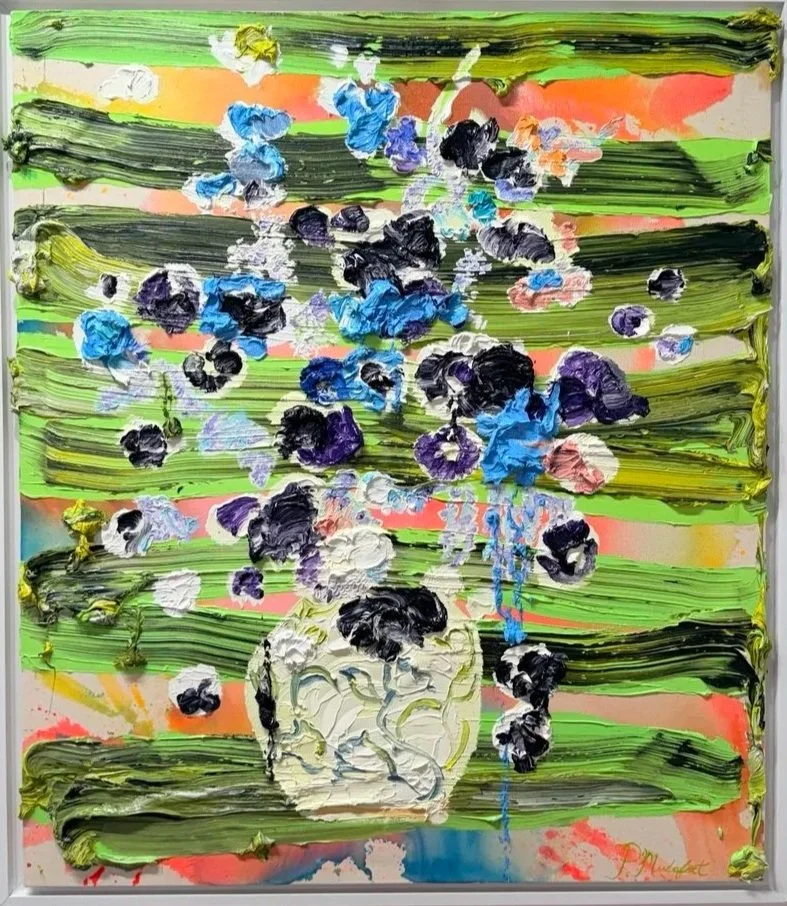
Texture Turns an Image into an Object
We often talk about painting as though paint simply carries an image. Sometimes the paint itself becomes part of the experience: it rises from the surface, catches light and creates grooves, ridges, peaks and shadow. That physicality matters because the surface changes with the light in ways a flat reproduction cannot show.
A raised passage that looks bright during the day may fall into shadow in the evening. A heavy application of blue may reveal white, green or violet when you approach it from the side. The artwork remains still, but the experience of it does not.
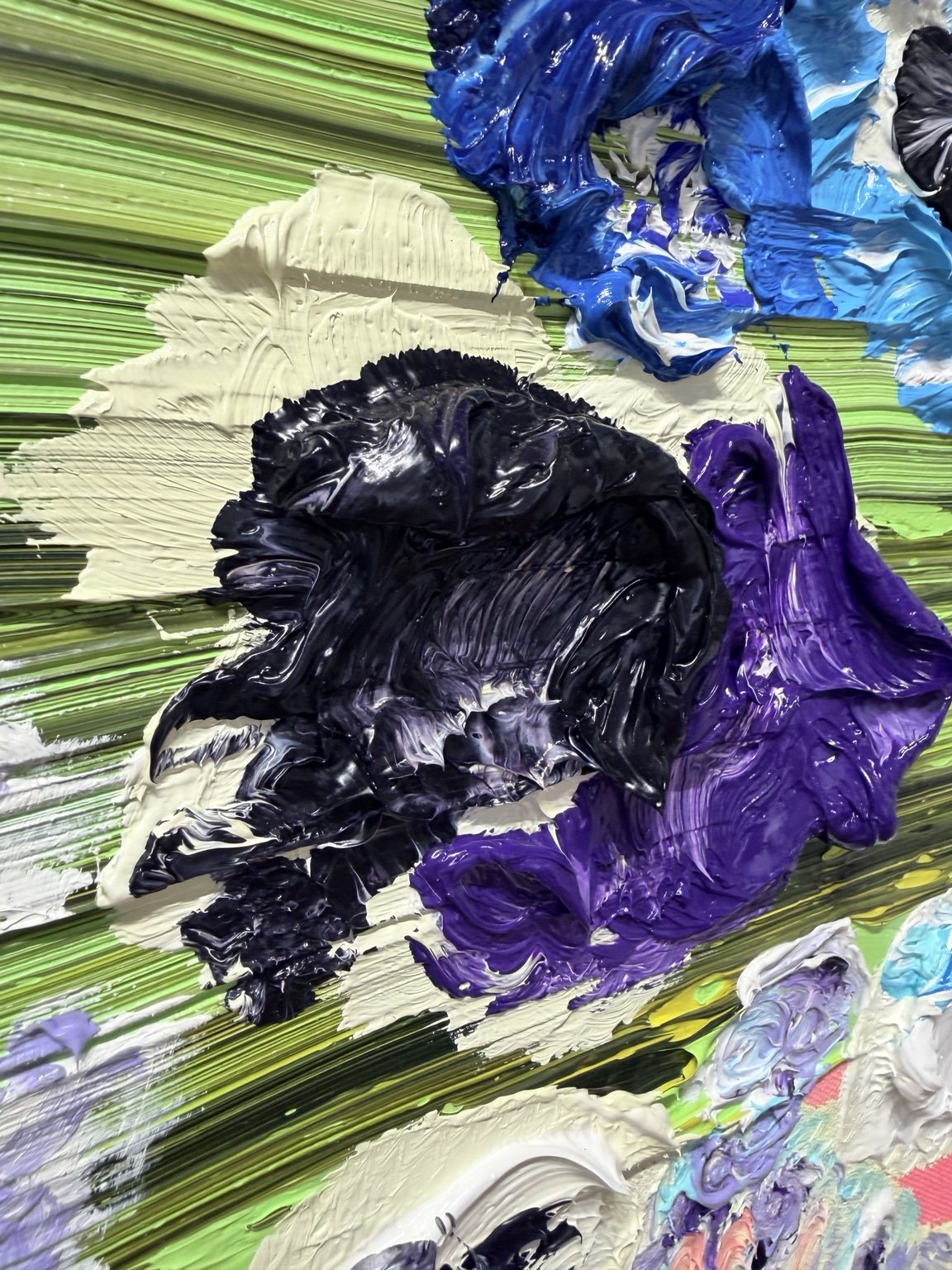
Up close, what originally looked like a flower or a stripe becomes something else entirely. Paint becomes substance, and you can see how it was pushed, dragged, deposited and layered. The surface begins to tell part of the story.
Paper Can Have a Surface Too
Drew Griffiths uses paper as a physical material, not simply as a flat surface to paint on. In Torn No. 17 and Curl No. 19, paper is combined with acrylic and spray paint on wood; Torn No. 17 also incorporates tape. Folds, creases and projecting edges give these works a depth that a small photograph can easily flatten.
From a distance, you may first notice the color and overall shape. Move closer and the paper becomes unmistakable: one fold catches the light, another falls into shadow, and a lifted edge reveals the space behind it. Here, texture is part of the construction itself, and the paper takes on a sculptural presence.
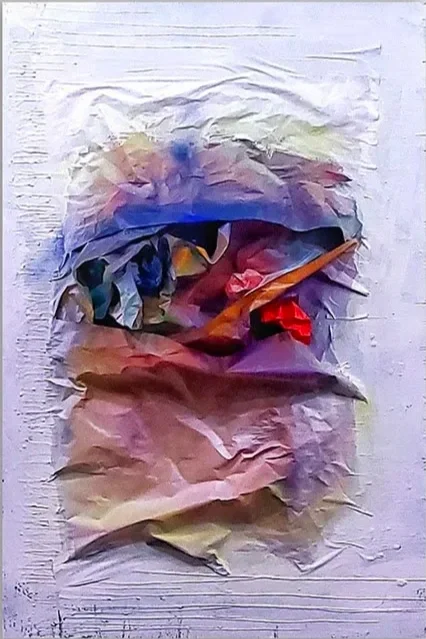
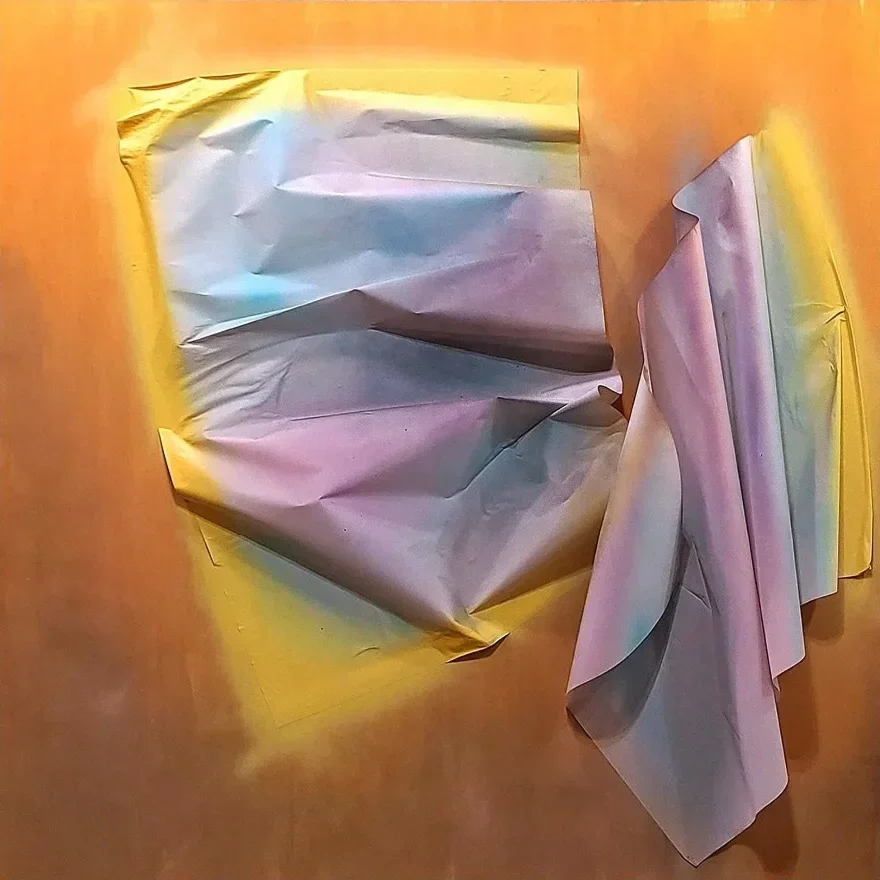
This is exactly the kind of difference a screen tends to compress. Online, we see the image; in person, we also see the object that carries it.
Texture Can Be Built, Not Just Painted
Building a surface does not always mean adding paper or collage. Acrylic paint itself can be layered into a surface with physical depth. In the two paintings shown here in the gallery, dense marks and accumulated paint create a texture that becomes clearer as you approach. These are acrylic paintings, rather than works made from paper.
From several feet away, the marks come together as a composition. Up close, you begin to distinguish the individual ridges, overlaps and interruptions that built the surface. The difference is between recognizing a pattern and seeing the material that gives that pattern its presence.
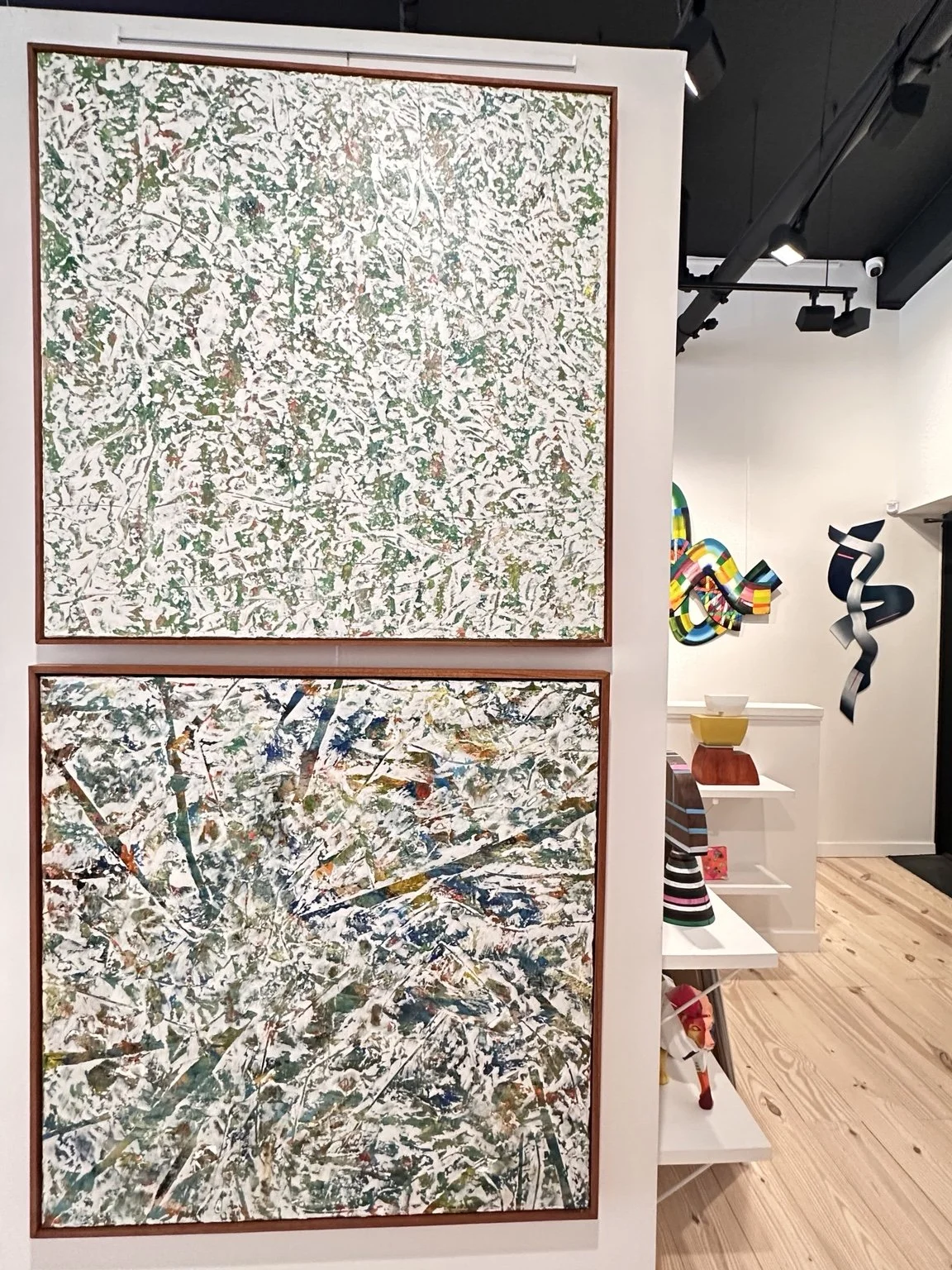
A photograph can reproduce the overall arrangement, but it has a harder time conveying the depth between those layers of paint. Raised marks catch the light differently from recessed passages, and small shadows become part of what you see. Looking at the surface in person reveals information that a flat image can compress.
Sometimes the Shadow Is Part of the Artwork
Texture can also leave the surface altogether. Some works fold outward from the wall, projecting, bending and letting light pass through them. Once that happens, shadow becomes another material. The wall is no longer simply supporting the artwork; it becomes part of the experience.
Move a few feet sideways and the relationships change. A fold overlaps another, one layer becomes transparent, and a shadow lengthens. The piece you saw from the front becomes a slightly different object from the side.
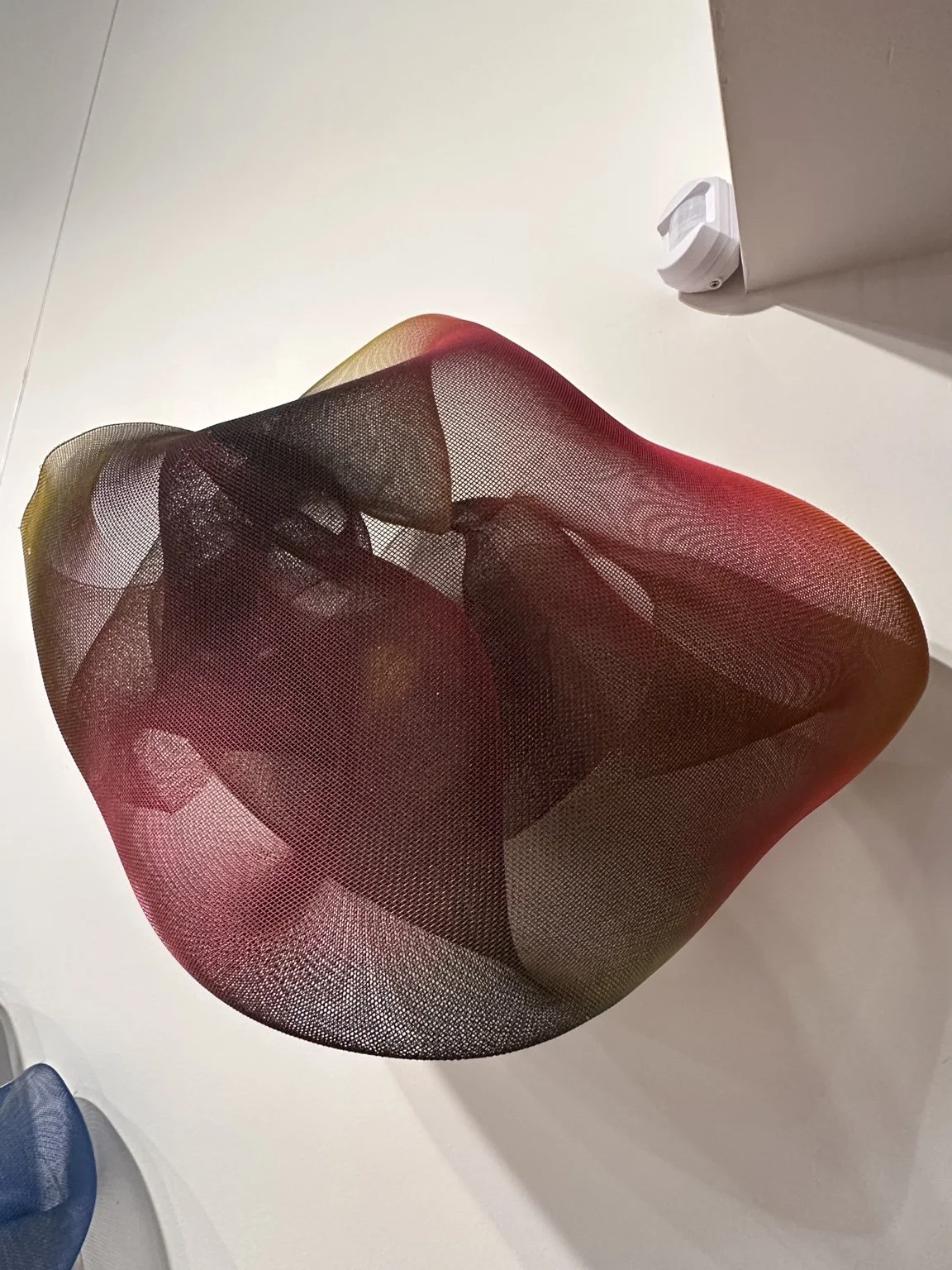
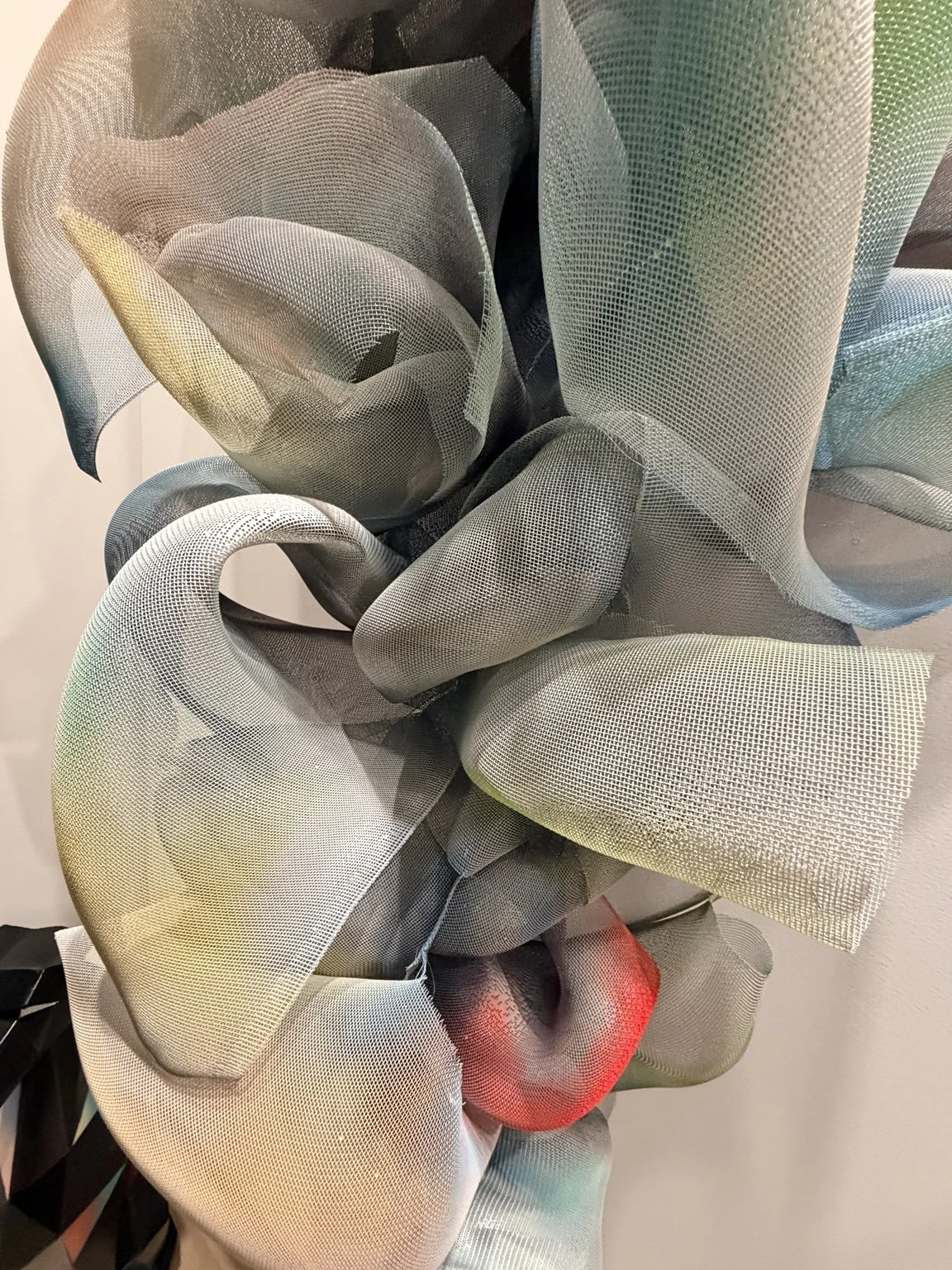
This is where photography reaches one of its clearest limits. There is no single correct view of an artwork that changes according to where you stand.
Texture Slows Looking Down
In Chapter 11, we looked at why some paintings keep our attention while others let us move on quickly. Texture gives us another answer: it gives the eye more to investigate. That does not necessarily mean more subject matter, but more information in the surface itself.
A ridge, a crease, a torn edge or a layer of paper can draw us closer. A transparent fold or a shadow that was not there a few hours earlier can invite another look as the light changes. These are small things, but they encourage us to keep looking. In a world where images are consumed almost instantly, that slowing down has value.
Texture Can Be Loud or Quiet
Not every textured work announces itself from across the room. Heavy impasto can be immediately visible, and a sculptural wall work may project several inches from the surface. Other textures are almost private, appearing only when you approach.
A raised mark, a change in paper, a layer barely sitting above another or the difference between matte and glossy material can be equally important. That quieter texture creates a work that reveals itself gradually instead of explaining everything at once.
Texture Makes Process Visible
Texture also reminds us that someone made the artwork. A digital reproduction can hide process almost completely, while a physical surface often does the opposite. You can see evidence of a hand or a tool, a decision or a correction, and the layer underneath.
The place where something was attached, folded or dragged becomes a trace of its making. That evidence creates a different relationship with the object: you are not simply receiving an image, but seeing something of how it came into existence.
Why This Matters When You Are Buying Art
Texture changes presence. A work with a highly physical surface interacts with a room in ways that are difficult to judge from a product photograph. Light, viewing angle and distance all affect what you see.
That does not make textured art better than flat art. It does mean that certain works deserve to be experienced in person, particularly when they depend on impasto, paper, collage, transparency, relief or layered materials. Seeing them in person is more than seeing a higher-resolution photograph; it is seeing information the photograph cannot contain.
A Note From the Gallery
Texture appears throughout J. Nunez Gallery in very different ways. In Marie P. Mudafort’s paintings, it can become dense, immediate and almost sculptural. In Drew Griffiths’ constructions, paper folds and projects from a wood support, making its physical character part of the work. In the acrylic paintings shown in the gallery, texture comes from accumulated paint and layered marks, while the mesh wall works introduce volume, transparency and shadow.
That variety is precisely why texture is interesting. There is no single technique called textured art; texture is one of the ways an artwork reminds us that it exists in the physical world. Sometimes the difference between liking an artwork on a screen and understanding it in person begins right there.